Buy quokr.com ?
We are moving the project
quokr.com .
Are you interested in purchasing the domain
quokr.com ?
domain@kv-gmbh.de · 0541-91531010
Buy quokr.com ?
What is a glycosidic bond?
A glycosidic bond is a type of covalent bond that joins a carbohydrate molecule to another group, which can be another carbohydrate or a non-carbohydrate molecule. It is formed through a condensation reaction between the hydroxyl group of one molecule and the anomeric carbon of another molecule, resulting in the loss of a water molecule. Glycosidic bonds are important in the structure of carbohydrates, such as in forming disaccharides like sucrose or polysaccharides like starch. **
What is the glycosidic bond in sucrose?
The glycosidic bond in sucrose is a type of covalent bond that links the glucose and fructose molecules together. It is a specific type of linkage known as an alpha-1,2-glycosidic bond, which forms between the carbon-1 atom of glucose and the carbon-2 atom of fructose. This bond is responsible for the formation of the disaccharide sucrose, which is commonly known as table sugar. **


Similar search terms for Glycosidic
Top-Angebote
Products related to Glycosidic:
-
Aten KA7170 Local Transmitter - KVM / USB extenderDescription The ATEN KA7170 is a compact USB KVM transmitter designed to extend keyboard, mouse and VGA signals over a network connection. It provides a practical solution for managing computers and servers from a remote location. The transmitter connects to the computer using USB Type A and VGA HD-15 connections, while its RJ-45 link provides the connection to compatible KVM equipment. Its wired design delivers reliable communication without requiring a wireless network. With a maximum transmission distance of up to 50 metres, the KA7170 is suitable for server rooms, data centres and professional IT environments where equipment may need to be located away from the operator. The unit supports video resolutions up to 1600 x 1200 according to the exact Currys specification. Link and activity indicators provide useful status information during operation. Its compact external form factor measures 4.3 x 9 x 2.3 cm and weighs approximately 100g. Firmware can also be upgraded, helping maintain compatibility and functionality over time.150,49 £*Shipping: 0,00 £Secure redirect to the provider
-
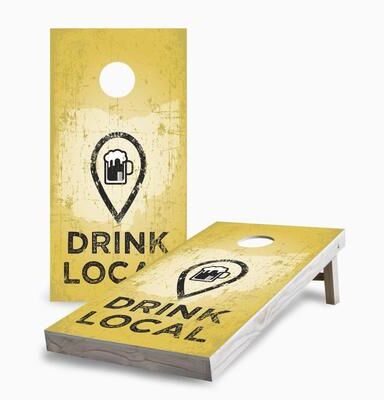
Skip's Garage Drink Local Cornhole Boards"Includes: (2) Cornhole Boards & (8) Bags. Boards are Regulation Sized 24"" Wide x 48"" Long. Bags Will Complement The Board Colors. Easily Message Us Bag Color Requests. Easily Add a Carry Cases, Lights, or Both!"296,49 $*Shipping: 0,00 $Secure redirect to the provider
-
Skip's Garage Drink Local Cornhole Boards"Includes: (2) Cornhole Boards & (8) Bags. Boards are Regulation Sized 24"" Wide x 48"" Long. Bags Will Complement The Board Colors. Easily Message Us Bag Color Requests. Easily Add a Carry Cases, Lights, or Both!"296,49 $*Shipping: 0,00 $Secure redirect to the provider
-
Skip's Garage Drink Local Cornhole Boards"Includes: (2) Cornhole Boards & (8) Bags. Boards are Regulation Sized 24"" Wide x 48"" Long. Bags Will Complement The Board Colors. Easily Message Us Bag Color Requests. Easily Add a Carry Cases, Lights, or Both!"296,49 $*Shipping: 0,00 $Secure redirect to the provider



-
What is a glycosidic bond in sucrose?
A glycosidic bond in sucrose is a type of covalent bond that links the glucose and fructose molecules together. It is formed through a condensation reaction, where a molecule of water is removed to join the two sugar molecules. This bond is important for the structure and function of sucrose, as it holds the two sugar molecules together and allows for the storage and transport of energy in plants. **
-
Why is there a beta-1,4-glycosidic bond in lactose?
The beta-1,4-glycosidic bond in lactose is formed between the glucose and galactose molecules. This bond is important because it determines the structure and properties of lactose. The beta configuration of the glycosidic bond in lactose allows for the formation of a specific three-dimensional structure that is essential for its function as a disaccharide sugar found in milk. This bond also influences the way lactose is digested by the enzyme lactase in the human body. **
-
How to draw trehalose in a 2-11 glycosidic linkage?
To draw trehalose in a 2-11 glycosidic linkage, start by drawing two glucose molecules. Connect the first glucose molecule's carbon 2 to the second glucose molecule's carbon 1 with a glycosidic bond. This linkage represents the 2-1 glycosidic bond. Next, add another glucose molecule and connect its carbon 1 to the second glucose molecule's carbon 1 with a glycosidic bond. This linkage represents the 1-1 glycosidic bond. This structure represents trehalose in a 2-1,1 glycosidic linkage. **
-
How do you draw trehalose in a 2-11 glycosidic linkage?
To draw trehalose in a 2-11 glycosidic linkage, start by drawing two glucose molecules connected by an alpha-1,1 glycosidic bond. Then, draw another glucose molecule connected to the first glucose molecule in the pair by an alpha-1,2 glycosidic bond. This creates the 2-11 glycosidic linkage in trehalose. The resulting structure should show three glucose molecules connected in a linear fashion with the 2-11 glycosidic linkage between the first and third glucose molecules. **


How do you draw trehalose in a 2-11 glycosidic bond?
To draw trehalose in a 2-11 glycosidic bond, you would first draw two glucose molecules connected by an alpha-1,1 glycosidic bond. Then, you would add another glucose molecule to the first glucose molecule in the 2 position, forming a 1,2 glycosidic bond. Finally, you would add the last glucose molecule to the second glucose molecule in the 1 position, forming a 2,1 glycosidic bond. This structure represents trehalose in a 2-11 glycosidic bond. **
What are the differences between an ester bond and glycosidic formation?
An ester bond is formed when a carboxyl group of one molecule reacts with a hydroxyl group of another molecule, resulting in the formation of an ester and the release of water. This type of bond is commonly found in lipids and is important for energy storage. On the other hand, glycosidic formation involves the bonding of a sugar molecule to another molecule, typically another sugar or an alcohol, through the reaction between the anomeric carbon of the sugar and a hydroxyl group of the other molecule. This type of bond is important for the formation of carbohydrates and is commonly found in polysaccharides such as starch and cellulose. **
Top-Angebote
Products related to Glycosidic:
-
Skip's Garage Drink Local Cornhole Boards"Includes: (2) Cornhole Boards & (8) Bags. Boards are Regulation Sized 24"" Wide x 48"" Long. Bags Will Complement The Board Colors. Easily Message Us Bag Color Requests. Easily Add a Carry Cases, Lights, or Both!"246,49 $*Shipping: 0,00 $Secure redirect to the provider
-
Urban Decay Vice Lipstick Reno-LocalDiscover the ultimate Vice Lipstick, a super-pigmented, longwear vegan lipstick designed to deliver high-impact, long-lasting color in a single, hydrating swipe. This creamy, moisturizing formula ensures your lips feel nourished and hydrated, forgetting dry, flaky lip concerns thanks to the infusion of aloe vera and avocado oil—ingredients known to be rich in antioxidants. Explore 35 Los Angeles-inspired shades, encompassing everything from sheer pink and everyday nude lipstick to bold bright orange and red lipstick, available in three vibrant and comfortable finishes: cream, matte, and shine. Upgrade your makeup routine with this essential, vegan lip color that offers comfy, even coverage and a smooth application, making it the perfect choice for on-the-go beauty lovers everywhere who demand quality and hydration in their long-lasting lipsticks. Ingredients: ISONONYL ISONONANOATE, OCTYLDODECANOL, OLEYL ERUCATE, SILICA, PHENYL TRIMETHICONE, POLYETHYLENE, SESAMUM INDICUM SEED OIL / SESAME SEED OIL, PARAFFIN, CI 77491 / IRON OXIDES, CI 77891 / TITANIUM DIOXIDE, PEG-45/DODECYL GLYCOL COPOLYMER, CERA MICROCRISTALLINA / MICROCRYSTALLINE WAX / CIRE MICROCRISTALLINE, DIMETHICONE, CI 77492 / IRON OXIDES, KAOLIN, CI 77499 / IRON OXIDES, SYNTHETIC WAX, DISTEARDIMONIUM HECTORITE, TOCOPHERYL ACETATE, DIMETHICONE CROSSPOLYMER, PENTAERYTHRITYL TETRA-DI-T-BUTYL HYDROXYHYDROCINNAMATE, PERSEA GRATISSIMA OIL / AVOCADO OIL, ALUMINUM HYDROXIDE, ISOPROPYL PALMITATE, ISOPROPYL MYRISTATE, TRIETHOXYCAPRYLYLSILANE, ALOE BARBADENSIS LEAF EXTRACT, TOCOPHEROL, HYDROGENATED PALM GLYCERIDES CITRATE, HELIANTHUS ANNUUS SEED OIL / SUNFLOWER SEED OIL, ROSMARINUS OFFICINALIS LEAF EXTRACT / ROSEMARY LEAF EXTRACT.24,00 £*Shipping: 2,95 £Secure redirect to the provider
-
Aten KA7170 Local Transmitter - KVM / USB extenderDescription The ATEN KA7170 is a compact USB KVM transmitter designed to extend keyboard, mouse and VGA signals over a network connection. It provides a practical solution for managing computers and servers from a remote location. The transmitter connects to the computer using USB Type A and VGA HD-15 connections, while its RJ-45 link provides the connection to compatible KVM equipment. Its wired design delivers reliable communication without requiring a wireless network. With a maximum transmission distance of up to 50 metres, the KA7170 is suitable for server rooms, data centres and professional IT environments where equipment may need to be located away from the operator. The unit supports video resolutions up to 1600 x 1200 according to the exact Currys specification. Link and activity indicators provide useful status information during operation. Its compact external form factor measures 4.3 x 9 x 2.3 cm and weighs approximately 100g. Firmware can also be upgraded, helping maintain compatibility and functionality over time.150,49 £*Shipping: 0,00 £Secure redirect to the provider
-
Skip's Garage Drink Local Cornhole Boards"Includes: (2) Cornhole Boards & (8) Bags. Boards are Regulation Sized 24"" Wide x 48"" Long. Bags Will Complement The Board Colors. Easily Message Us Bag Color Requests. Easily Add a Carry Cases, Lights, or Both!"296,49 $*Shipping: 0,00 $Secure redirect to the provider
-
What is a glycosidic bond?
A glycosidic bond is a type of covalent bond that joins a carbohydrate molecule to another group, which can be another carbohydrate or a non-carbohydrate molecule. It is formed through a condensation reaction between the hydroxyl group of one molecule and the anomeric carbon of another molecule, resulting in the loss of a water molecule. Glycosidic bonds are important in the structure of carbohydrates, such as in forming disaccharides like sucrose or polysaccharides like starch. **
-
What is the glycosidic bond in sucrose?
The glycosidic bond in sucrose is a type of covalent bond that links the glucose and fructose molecules together. It is a specific type of linkage known as an alpha-1,2-glycosidic bond, which forms between the carbon-1 atom of glucose and the carbon-2 atom of fructose. This bond is responsible for the formation of the disaccharide sucrose, which is commonly known as table sugar. **
-
What is a glycosidic bond in sucrose?
A glycosidic bond in sucrose is a type of covalent bond that links the glucose and fructose molecules together. It is formed through a condensation reaction, where a molecule of water is removed to join the two sugar molecules. This bond is important for the structure and function of sucrose, as it holds the two sugar molecules together and allows for the storage and transport of energy in plants. **
-
Why is there a beta-1,4-glycosidic bond in lactose?
The beta-1,4-glycosidic bond in lactose is formed between the glucose and galactose molecules. This bond is important because it determines the structure and properties of lactose. The beta configuration of the glycosidic bond in lactose allows for the formation of a specific three-dimensional structure that is essential for its function as a disaccharide sugar found in milk. This bond also influences the way lactose is digested by the enzyme lactase in the human body. **
Similar search terms for Glycosidic
-
Skip's Garage Drink Local Cornhole Boards"Includes: (2) Cornhole Boards & (8) Bags. Boards are Regulation Sized 24"" Wide x 48"" Long. Bags Will Complement The Board Colors. Easily Message Us Bag Color Requests. Easily Add a Carry Cases, Lights, or Both!"296,49 $*Shipping: 0,00 $Secure redirect to the provider
-
Skip's Garage Drink Local Cornhole Boards"Includes: (2) Cornhole Boards & (8) Bags. Boards are Regulation Sized 24"" Wide x 48"" Long. Bags Will Complement The Board Colors. Easily Message Us Bag Color Requests. Easily Add a Carry Cases, Lights, or Both!"296,49 $*Shipping: 0,00 $Secure redirect to the provider
-
Skip's Garage Drink Local Cornhole Boards"Includes: (2) Cornhole Boards & (8) Bags. Boards are Regulation Sized 24"" Wide x 48"" Long. Bags Will Complement The Board Colors. Easily Message Us Bag Color Requests. Easily Add a Carry Cases, Lights, or Both!"333,49 $*Shipping: 0,00 $Secure redirect to the provider
-
Skip's Garage Drink Local Cornhole Boards"Includes: (2) Cornhole Boards & (8) Bags. Boards are Regulation Sized 24"" Wide x 48"" Long. Bags Will Complement The Board Colors. Easily Message Us Bag Color Requests. Easily Add a Carry Cases, Lights, or Both!"333,49 $*Shipping: 0,00 $Secure redirect to the provider
-
How to draw trehalose in a 2-11 glycosidic linkage?
To draw trehalose in a 2-11 glycosidic linkage, start by drawing two glucose molecules. Connect the first glucose molecule's carbon 2 to the second glucose molecule's carbon 1 with a glycosidic bond. This linkage represents the 2-1 glycosidic bond. Next, add another glucose molecule and connect its carbon 1 to the second glucose molecule's carbon 1 with a glycosidic bond. This linkage represents the 1-1 glycosidic bond. This structure represents trehalose in a 2-1,1 glycosidic linkage. **
-
How do you draw trehalose in a 2-11 glycosidic linkage?
To draw trehalose in a 2-11 glycosidic linkage, start by drawing two glucose molecules connected by an alpha-1,1 glycosidic bond. Then, draw another glucose molecule connected to the first glucose molecule in the pair by an alpha-1,2 glycosidic bond. This creates the 2-11 glycosidic linkage in trehalose. The resulting structure should show three glucose molecules connected in a linear fashion with the 2-11 glycosidic linkage between the first and third glucose molecules. **
-
How do you draw trehalose in a 2-11 glycosidic bond?
To draw trehalose in a 2-11 glycosidic bond, you would first draw two glucose molecules connected by an alpha-1,1 glycosidic bond. Then, you would add another glucose molecule to the first glucose molecule in the 2 position, forming a 1,2 glycosidic bond. Finally, you would add the last glucose molecule to the second glucose molecule in the 1 position, forming a 2,1 glycosidic bond. This structure represents trehalose in a 2-11 glycosidic bond. **
-
What are the differences between an ester bond and glycosidic formation?
An ester bond is formed when a carboxyl group of one molecule reacts with a hydroxyl group of another molecule, resulting in the formation of an ester and the release of water. This type of bond is commonly found in lipids and is important for energy storage. On the other hand, glycosidic formation involves the bonding of a sugar molecule to another molecule, typically another sugar or an alcohol, through the reaction between the anomeric carbon of the sugar and a hydroxyl group of the other molecule. This type of bond is important for the formation of carbohydrates and is commonly found in polysaccharides such as starch and cellulose. **
* All prices are inclusive of VAT and, if applicable, plus shipping costs. The offer information is based on the details provided by the respective shop and is updated through automated processes. Real-time updates do not occur, so deviations can occur in individual cases. ** Note: Parts of this content were created by AI.